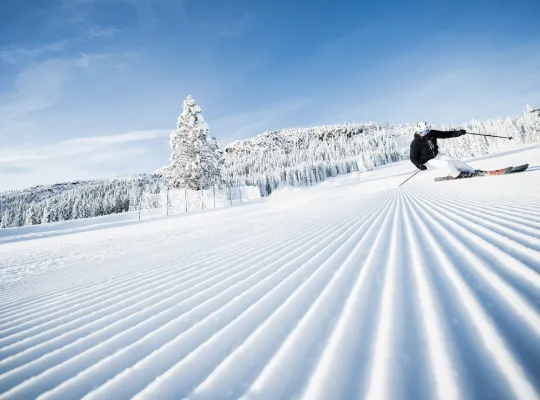
Skipatrulje Oppdal

Ski safety

Alpine skiing is associated with a certain danger. In Hafjell, Kvitfjell and Oppdal, great emphasis is placed on safety work, so that you as a guest with us will have a safe and good experience on the slopes.

For your own safety, it is important that signs and instructions set up on the ground are followed.

In addition, it is necessary to have knowledge of the most important driving rules that apply to safe travel on the alpine slopes. 

We wish all our guests a safe and good ski season!

Common regulations for all Norwegian ski resorts are described in the Alpine Code of Conduct:

Safe skiing starts with all of us

At Hafjell, Kvitfjell and Oppdal , we work every day to ensure that you have a safe and good experience on the slopes. Through well-groomed trails, clear signage and active safety work, we facilitate skiing fun for everyone, regardless of age and skill level.

Youtube video image

As a guest, you also play an important role. By showing consideration for others, adapting your speed to the conditions and following the rules of alpine skiing, you help ensure that everyone can travel safely on the slopes.


Familiarize yourself with the 10 rules of alpine skiing before you set out skiing. Here you will also find useful information about safety, equipment and traffic in our ski resorts.


Do you need help on the slopes?

In case of accidents or need assistance, you can contact the ski patrol directly:


Hafjell: +47 404 01 500
Kvitfjell: +47 476 46 527
Oppdal: +47 905 94 485


In case of serious accidents, call the medical emergency number 113.


The 10 Alpine Skiing Rules

1. Responsibility to avoid harm
You must act in such a way that you are not a danger to yourself or others. You must at all times have the necessary control of the ski/snowboard equipment and you are responsible for preventing the equipment from causing damage to people or other materials. 

2. Adapt your speed to the conditions 
You must drive in a controlled manner and adapt your speed and driving style to your skills, terrain, weather and driving conditions and traffic. 

3. Give way
If you come from behind, you are responsible for driving in such a way that you do not expose others to collision. 

4. Overtaking and overtaking 
You can overtake another skier or snowboarder provided that he or she has sufficient space for both controlled and uncontrolled movements. It is forbidden to drive straight downhill, except during organized training.

5. Starting, entering or turning uphill on the descent
If you drive into, or turn uphill on a slope, you must ensure that this is done without danger to yourself or others. The same applies to driving after a stop.

6. Stop on the slopes 
Unless absolutely necessary, avoid stopping on the slope in narrow places or places with limited visibility. After falling in such a place, move away as quickly as possible. 

7. On foot on the slopes
If you are on foot, you must only use the outer edges of the hill.

8. Respect signs and markings
Follow signage, markings and instructions.

9. Assistance in case of accidents
In the event of injuries, every skier or snowboarder has a duty to help. 

10. Identification 
In the event of injuries and accidents, witnesses and contributors have a duty to provide personal information. 

It is forbidden to stay in the ski resort outside opening hours. This can endanger life as construction work is underway with snow production and preparation.
Alpine skiing is associated with a certain danger. Drugs and skiing do not go together. Violation of the alpine rules may result in expulsion from the facility.

As always, the following advice applies: 
It is important that you wear a helmet, show consideration for other skiers and snowboarders and follow the ski rules. It should be safe to ski and we all have a responsibility for our own skiing.

The Alpine Slopes

On the trail map, you will find an overview where the trails are divided into an international color code that indicates the level of difficulty and recommended skill level.

The color codes are also indicated on the trail signs on the slopes.
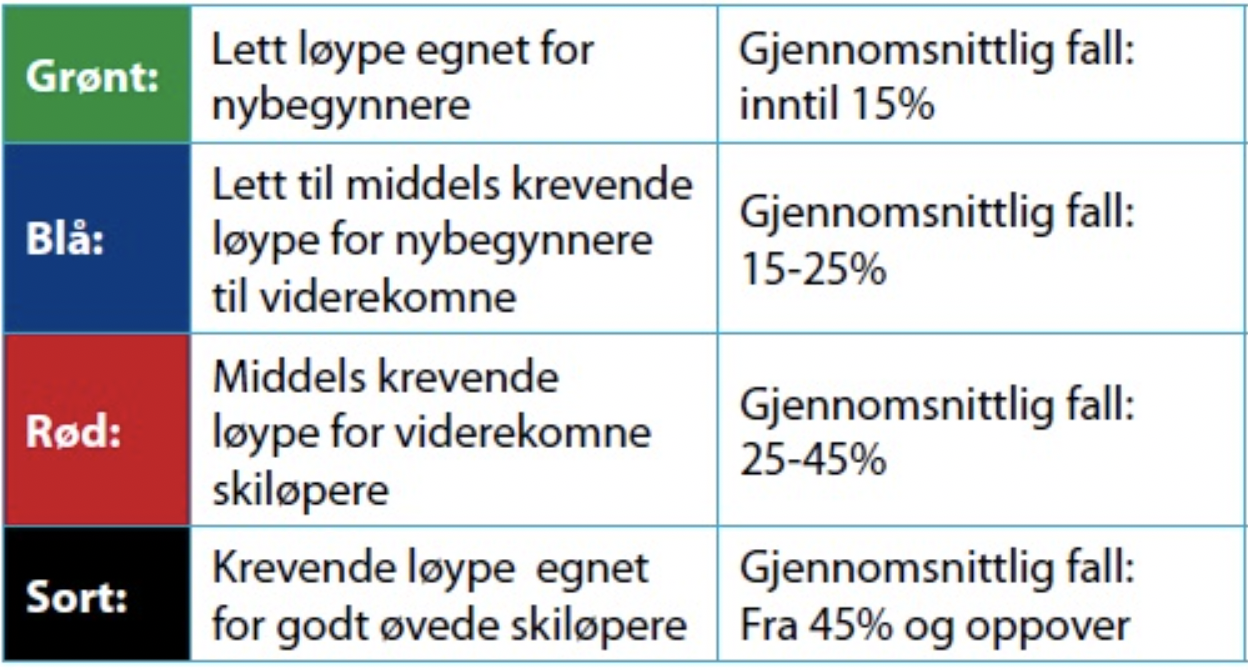
Skiltregler i alpinbakken.

Steeper sections than an average drop may occur within each category, but the prerequisite is that these sections are short and laid out in a clear terrain.

Skis and safety equipment

Skis and safety equipment that are adapted to the individual's needs and skill level are crucial to have a good experience. Worn steel edges and poorly groomed skis are often the reason why the skiing experience is not as expected.

Feel free to stop by the ski rental for tips and advice. Here you can also get help to sharpen steel edges and groom your skis, or snowboard.

The most important thing you can do for your own safety is to wear a helmet. Ski helmets today have very good comfort, and you are guaranteed to find a helmet that suits you, whether you buy or rent the helmet. We recommend everyone to wear a helmet in Hafjell, Kvitfjell and Oppdal.

A back brace can prevent injuries to the back and neck, as the splint distributes the pressure from impact after a fall over a larger area. When riding in a terrain park and jumping, the use of a back brace is extra important.

A small tip can be to take a ski school lesson with us. Regardless of skill level, you will be able to get tips and advice that improve your technique and skiing experience. 

Terrain park

In Hafjell, Kvitfjell and Oppdal there are several terrain parks. The areas are adapted to different skill levels, so that everyone should be able to find their favorite area.

The most important safety tip is to familiarize yourself with the park before testing any of the elements. 
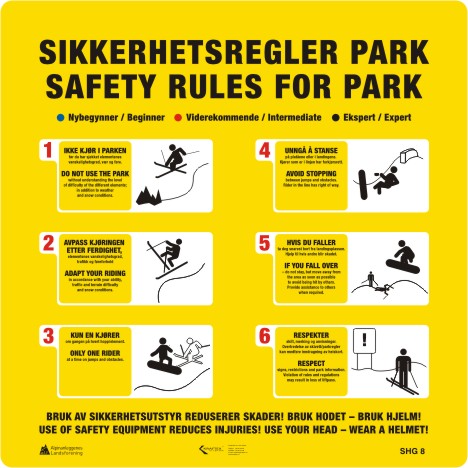
Terrengparkregler

Off-piste

Off-piste is off-piste skiing off a groomed trail. All skiing in areas that are not marked on the trail map is at the skier's own risk.

If you choose to drive outside the facility's marked trail network, it is important that the necessary precautions are taken, especially  if there is an avalanche risk in the area. 

In Kvitfjell and Oppdal , there are a number of areas that may be exposed. When boarding the main lifts, you will find information about the risk of avalanches.

You should always ride with others when you move outside the facility's marked and groomed trail network.
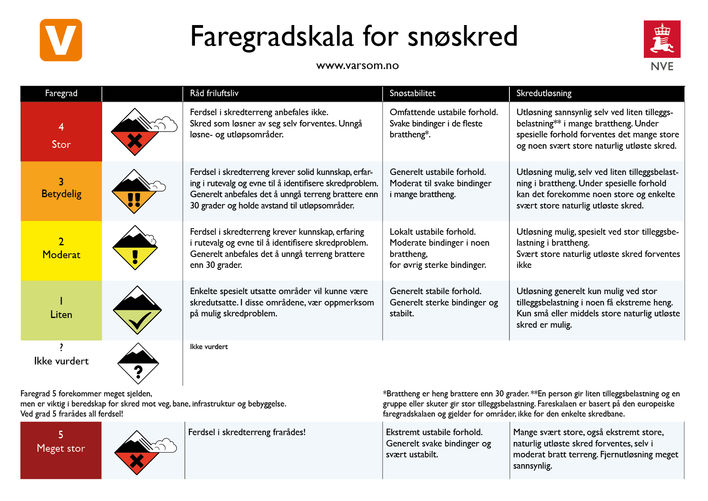
Skredfare-skala.

Traffic in the facility outside opening hours

All traffic in the facility when the lifts are closed is prohibited. The main reason for this is that work with mechanical equipment takes place both in the evening and at night. Grooming machines, snowmobiles and equipment used for snow production will pose a great danger. 

It can be difficult to spot grooming machines when winch is taking place. Here, the grooming machine is used a long steel wire that is attached to different points in the ground. Even though it is well notified here with signs and flashing lights, you will not see the steel wire that the machine is hanging from. 

We encourage everyone to respect the ban on traffic on the slopes outside opening hours. 

Here we would like to point out that serious violations may result in a police report.
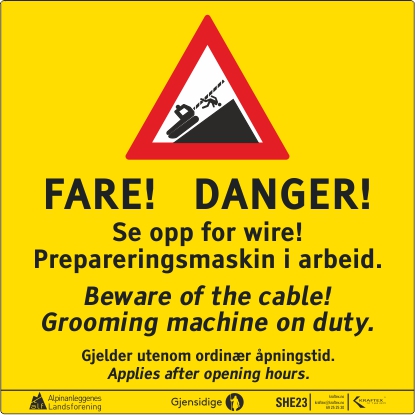
Fareskilt.

In collaboration with the National Association of Alpine Resorts, ALF.